Stable torque and vibration control in a complex formation
This public case summarizes a field application in a complex oil and gas well, with the page focused on tool application logic, field response, and post-job parameter review.
Challenge
As complex reservoirs are drilled deeper and longer, drill-string vibration, stick-slip, torque fluctuation, and early bit damage become more prominent. The operation required more stable BHA energy transfer under high-friction and complex-formation conditions while reducing tool-failure risk and improving drilling efficiency.
Tool configuration
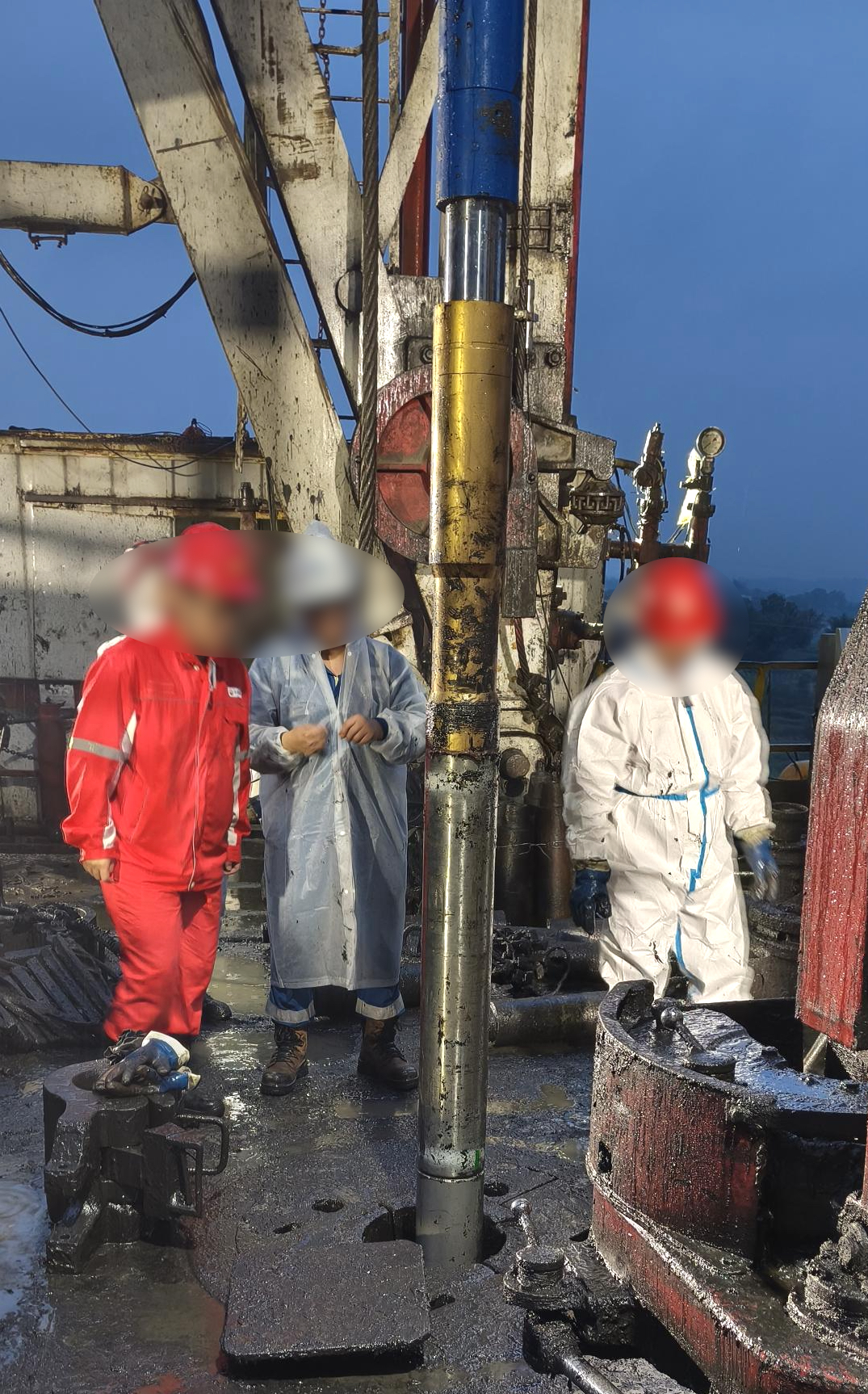
ASBR incorporated the Accumulator Stable Drilling Tool into the BHA and deployed it together with rotary steering tools. Before running in hole, the engineering team used dynamic modeling to compare layout options and identify the appropriate placement window for the vibration-control tool.
Field response
During drilling, WOB was maintained around 100kN, while lateral vibration and stick-slip remained under control. The interval achieved an average ROP of 7.06 m/h, compared with 4.31 m/h from a reference run in the same block using an “MWD + mud motor” approach, representing a 63.8% improvement. The tool also helped control bit-side rock-breaking torque at around 5kN·m, and bit cutter integrity remained above 95% after retrieval.
Vibration review
Compared with vibration data from a nearby well in the same interval, lateral average vibration decreased from 1.56 to 0.83, reducing harmful lateral vibration by 47%; axial average vibration decreased from 0.55 to 0.21, reducing harmful axial vibration by 62%; torsional average vibration decreased from 0.46 to 0.18, reducing harmful torsional vibration by 61%. The results exceeded the 20% harmful-vibration reduction target.
Review conclusion
The Accumulator Stable Drilling Tool demonstrated combined benefits in WOB stabilization, smoother torque transfer, stick-slip mitigation, and bit protection. The case provides a practical reference for BHA configuration and parameter-window selection in complex formations, long laterals, and vibration-sensitive intervals.